524 W 4th St, Suite B, Perris, CA 92570
Mon-Fri 9AM-7PM · Sat 9AM-1PM · Sun Closed (951) 355-0030

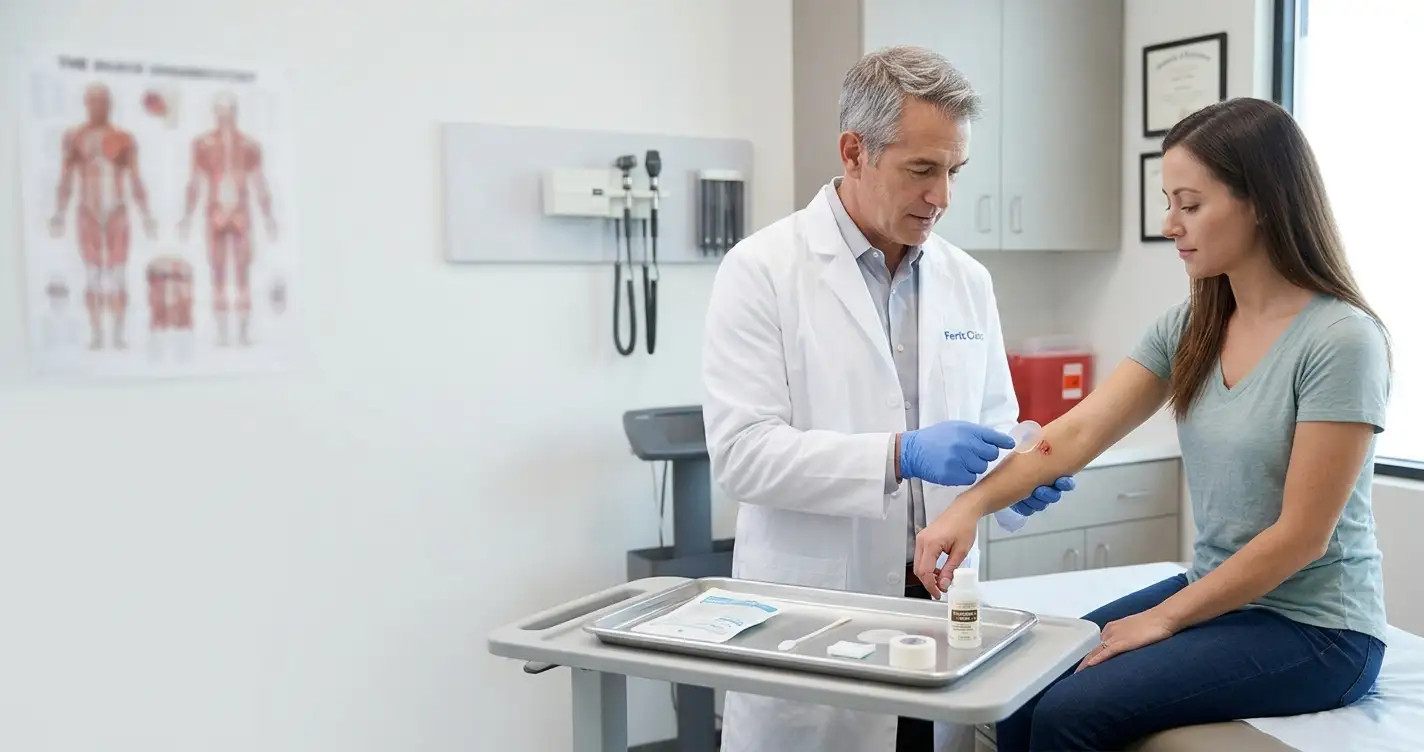
A cut can happen at any time. You may get one while cooking, working, playing sports, or doing everyday activities. Some cuts are minor and heal with basic wound care. Others may need medical attention and stitches.
But do urgent care centers do stitches?
Yes, many urgent care centers provide stitches for minor to moderate cuts and lacerations. However, not every urgent care facility offers wound closure services. The wound’s type, depth, location, and severity also determine where you should seek treatment.
Urgent care can be a convenient option for non-emergency cuts that need professional evaluation. However, serious injuries may require an emergency room.
In this guide, you’ll learn when urgent care can provide stitches, how to recognize a cut that needs medical attention, what treatment options are available, and when you should visit an emergency room instead.
Yes. Many urgent care centers can evaluate cuts and provide stitches when the injury is appropriate for treatment at their facility.
Stitches, also called sutures, are medical threads used to bring the edges of a wound together. They help close the injured skin and support healing.
Urgent care providers may use stitches to treat certain types of lacerations. These include some cuts on the arms, legs, scalp, and other areas of the body.
However, services vary between facilities. Some urgent care centers offer wound closure, while others only provide basic wound care and evaluation.
Before visiting, check whether the clinic offers laceration repair and whether its medical team can treat your type of injury.
Depending on the facility and the injury, urgent care may evaluate and treat:
The provider will examine the injury before deciding on treatment.
A wound that looks small on the surface may involve deeper tissue. For this reason, a cut’s size alone does not determine whether urgent care can treat it.
Not every cut needs stitches. Some minor wounds can heal with proper cleaning and a bandage.
However, certain signs suggest that a wound needs professional evaluation.
Here are some common signs to watch for.
A deep or wide cut may need stitches to bring the wound edges together.
If you can see deeper tissue beneath the skin, don’t assume a bandage will be enough. A healthcare professional should evaluate the injury.
Deep wounds may affect muscles, tendons, nerves, or blood vessels.
Some cuts close naturally after the injury. Others remain open.
If the edges of a cut do not come together, the wound may need medical closure.
Leaving certain wounds open can affect healing and may increase the risk of scarring.
Most minor cuts stop bleeding with basic first aid.
However, bleeding that continues despite firm, steady pressure needs medical attention.
If bleeding is severe or cannot be controlled, call 911 or go to the nearest emergency department. Do not delay emergency care to visit an urgent care center.
The location of a wound matters.
Cuts on the face may need careful closure to support healing and reduce visible scarring.
Cuts near joints may also need attention because movement can pull the wound edges apart.
A healthcare provider can determine the most appropriate treatment.
Some wounds become infected, especially when dirt or other contaminants enter the skin.
Watch for:
An infected wound needs medical evaluation. A provider must determine whether wound closure is appropriate or whether another treatment is needed.
Urgent care centers handle many non-emergency injuries. However, treatment options depend on the medical staff, available equipment, and the patient’s condition.
Some common injuries that may be evaluated at urgent care include:
Small cuts and scrapes often need basic wound care.
A provider may clean the affected area, assess the injury, and recommend an appropriate dressing.
Most minor scrapes do not need stitches.
A laceration is a cut or tear in the skin.
Some simple lacerations may need stitches or another closure method. An urgent care provider can examine the wound and decide whether the facility can safely treat it.
Sports and recreational activities can cause cuts and other skin injuries.
A healthcare provider can evaluate the wound and determine whether it needs cleaning, dressing, or closure.
Some wounds affect only the outer layers of the skin.
Depending on their location and condition, they may be suitable for treatment at an urgent care facility.
Not all wounds are appropriate for urgent care. Deep puncture wounds, serious bites, and injuries involving deeper structures may require emergency or specialized care.
Knowing the difference between urgent care and emergency care can help you choose the right place for treatment.
Urgent care is designed for non-life-threatening illnesses and injuries. Emergency departments handle serious injuries that may need immediate or specialized medical attention.
Some wounds should go directly to the emergency room.
Seek emergency care if you have:
Call 911 if the injury is life-threatening or requires emergency medical assistance.
| Situation | Where to Seek Care |
| Minor cut with controlled bleeding | Urgent care evaluation |
| Simple laceration needing closure | Urgent care, if available |
| Cut with edges that remain open | Prompt medical evaluation |
| Severe or uncontrolled bleeding | Emergency room or 911 |
| Suspected tendon or nerve injury | Emergency department |
| Serious head or internal injury | Emergency department |
| Deep or contaminated wound | Prompt medical evaluation; emergency care when severe |
The final decision depends on the injury. If you are unsure where to go, contact a healthcare provider. For life-threatening emergencies, call 911.
Stitches are not the only option for closing a wound.
Healthcare providers may use different wound closure methods depending on the injury, its location, and the condition of the surrounding skin.
Here are four common methods.
Traditional stitches use medical thread to hold the wound edges together.
They are commonly used for cuts that need more support during healing.
Some sutures dissolve naturally. Others need to be removed by a healthcare professional.
Medical skin adhesive is a special type of glue used to close certain small, clean wounds.
It holds the skin edges together without traditional stitches.
Skin glue is not suitable for every injury. Providers consider the wound’s location, depth, and tension before using it.
Steri-Strips are thin adhesive strips that help hold the edges of a wound together.
They may be suitable for certain small, shallow cuts where the skin edges can come together easily.
They do not provide the same support as stitches for deeper wounds.
Medical staples are another option for closing some wounds.
They are commonly used for certain longer cuts, particularly on the scalp and other areas where staples may be appropriate.
A healthcare provider decides which method is best for each injury.
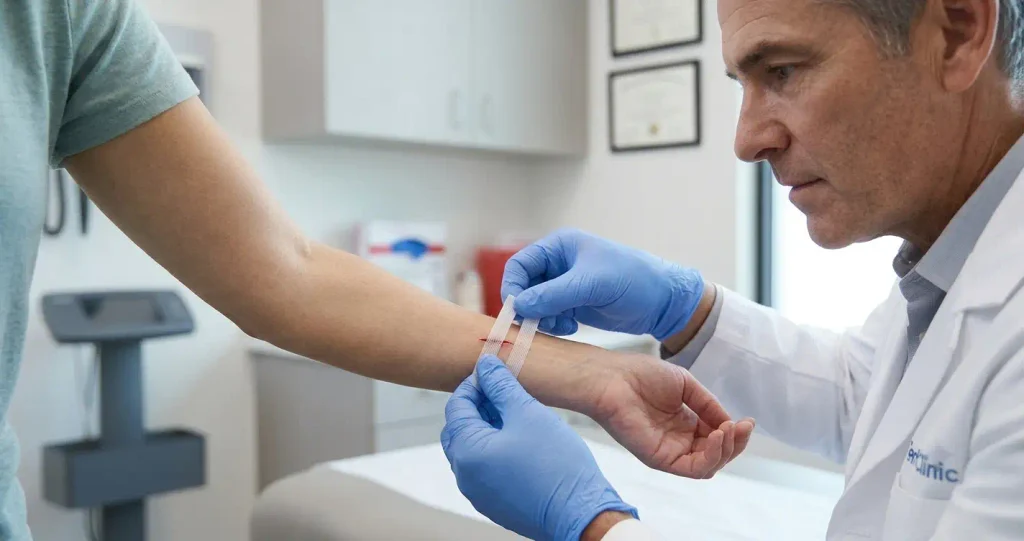
If a wound is suitable for stitches and the urgent care facility offers the service, the treatment usually involves several steps.
Understanding the process can help you know what to expect.
The healthcare provider examines the cut.
They check its depth, length, location, and condition. They may also assess nearby movement and sensation.
This helps determine whether stitches are appropriate.
The provider cleans the wound and removes dirt or other material when appropriate.
Proper wound cleaning helps reduce infection risk.
Some injuries may need additional treatment before closure.
If stitches are needed, a provider may use local anesthesia to numb the area.
This helps reduce discomfort during the procedure.
You may still notice some pressure or movement.
The provider brings the wound edges together using an appropriate closure method.
This may involve traditional sutures, skin adhesive, wound closure strips, or another suitable option.
After closing the wound, the provider explains how to care for it.
You may receive instructions about keeping the area clean, changing dressings, activity restrictions, and follow-up appointments.
Following these instructions supports proper healing.
The cost of stitches at urgent care varies.
There is no single price for every wound because treatment depends on several factors.
Some of the main factors include:
A small, simple cut may require less treatment than a larger or more complex laceration.
The number of sutures, wound location, and additional care can affect the total cost.
Traditional stitches, skin adhesive, and other closure methods may have different costs.
Additional services, such as wound cleaning, examination, or medication, may also affect the final bill.
Your insurance plan may cover some or all of the eligible treatment costs.
However, coverage depends on your specific policy, provider network, copay, deductible, and other plan terms.
Before visiting, contact the urgent care center and your insurance provider to ask about coverage.
If you do not have insurance, ask the clinic about its self-pay rates.
Request an estimate before treatment when possible. The final amount may change depending on the wound and the care required.
Urgent care may cost less than an emergency room visit for an injury that can safely be treated at an urgent care facility.
However, the actual cost depends on the facility, treatment, and insurance coverage.
Do not choose urgent care based on cost alone if the injury may be serious. Emergency care should always come first when needed.
Promptly getting a wound evaluated is important.
Some cuts are easier to close when treated soon after the injury. However, no single time limit applies to every wound.
A healthcare provider considers several factors before deciding whether stitches are appropriate.
These include:
A clean cut on one part of the body may be treated differently from a contaminated wound or an injury elsewhere.
Do not wait a specific number of hours to seek care. If you think a cut needs stitches, arrange a medical evaluation as soon as possible.
Proper wound care matters after you receive stitches.
Following your provider’s instructions can help the wound heal and reduce infection risk.
Here are some general wound care considerations.
Follow your healthcare professional’s instructions.
Many wounds need to stay clean and protected during the early stages of healing.
Do not apply products or cleaning solutions unless your provider recommends them.
Your provider may recommend covering the wound with a clean dressing.
Change it according to the instructions you receive. Replace it sooner if it becomes wet or dirty.
Activities that stretch or pull the injured area may affect healing.
Follow any activity restrictions your healthcare professional provides.
Monitor the wound as it heals.
Contact a healthcare professional if you notice increasing redness, swelling, pain, warmth, unusual drainage, or fever.
Seek prompt medical attention if symptoms worsen.
Some wounds need a follow-up visit to check healing.
Your provider may also schedule a visit to remove stitches if non-absorbable sutures were used.
Following the recommended schedule helps ensure that the wound receives appropriate care.
Yes, some urgent care centers offer stitch removal services.
However, availability varies by facility.
Stitch removal depends on the suture type, wound location, and how well the area has healed.
Absorbable stitches generally dissolve naturally and do not need routine removal.
Non-absorbable stitches usually need removal by a healthcare professional.
The removal schedule depends on the body area and the provider’s assessment. Facial wounds, scalp wounds, and wounds on the legs or joints may have different timelines.
Never remove stitches yourself without professional guidance.
If you received stitches at another facility, contact an urgent care center to ask whether it can provide follow-up care.
Both children and adults may receive wound evaluation at urgent care.
However, the treatment decision depends on the patient’s age, injury, and the facility’s capabilities.
Children can get cuts while playing, participating in sports, or doing everyday activities.
Some minor lacerations may be suitable for urgent care treatment.
However, a child’s wound may need specialized care depending on its depth, location, and the child’s ability to cooperate during treatment.
A pediatric emergency department may be more appropriate for serious injuries or cases requiring specialized support.
Adults may need stitches after workplace injuries, household accidents, sports activities, or other incidents.
An urgent care provider can assess many non-emergency cuts and determine whether the facility can provide the necessary treatment.
If the injury involves deeper structures or severe bleeding, you may need emergency care.
If you have a minor cut or skin injury, a healthcare professional can help you determine the right next step.
Perris Clinic provides walk-in urgent care services for non-emergency illnesses and injuries in Perris, California.
The clinic lists minor cuts and scrapes among its urgent care services. Its medical team evaluates patients of all ages and helps determine the appropriate care for their condition.
If you have a cut that may need stitches, contact the clinic before visiting to confirm whether its current services can handle your specific wound.
Perris Clinic offers several features for individuals and families looking for local healthcare:
The clinic serves patients in Perris and nearby communities.
Address: 524 W 4th St, Suite B, Perris, CA 92570
Phone: (951) 355-0030
Website: https://perrisclinic.com/
Call the clinic to ask about available wound care services, insurance coverage, and current operating hours.
For severe bleeding or a life-threatening injury, call 911 or visit the nearest emergency department instead.
Some urgent care centers can treat certain deeper cuts. However, wounds involving muscles, tendons, nerves, or blood vessels may require emergency or specialized care. A healthcare provider must assess the injury before deciding on treatment.
Yes, some urgent care centers offer stitch removal. However, the service depends on the facility. The provider will check whether the wound has healed enough before removing non-absorbable stitches.
Some urgent care centers use medical skin adhesive for suitable wounds. Skin glue works for certain small, clean cuts. It is not appropriate for every wound, so a healthcare provider must evaluate the injury first.
Urgent care may be less expensive than the emergency room for injuries that can be safely treated there. However, costs depend on the facility, treatment, and insurance coverage. Serious injuries should always receive emergency care.
Bleeding that does not stop with firm, steady pressure needs immediate medical attention. If bleeding is severe or uncontrolled, call 911 or go to the nearest emergency department. Do not delay emergency care to visit urgent care.
So, do urgent care centers do stitches? Yes, many facilities provide stitches for certain cuts and lacerations. However, treatment availability and eligibility depend on the facility and the wound’s condition.
If you have a cut that may need stitches, do not ignore it or wait for it to get worse. A healthcare professional can examine the injury and recommend the right treatment.
For minor cuts and scrapes in Perris, CA, Perris Clinic offers walk-in urgent care services. Call the clinic at (951) 355-0030 to ask about available wound care options before you visit.
If you have a serious injury or uncontrolled bleeding, call 911 or seek emergency care immediately.
